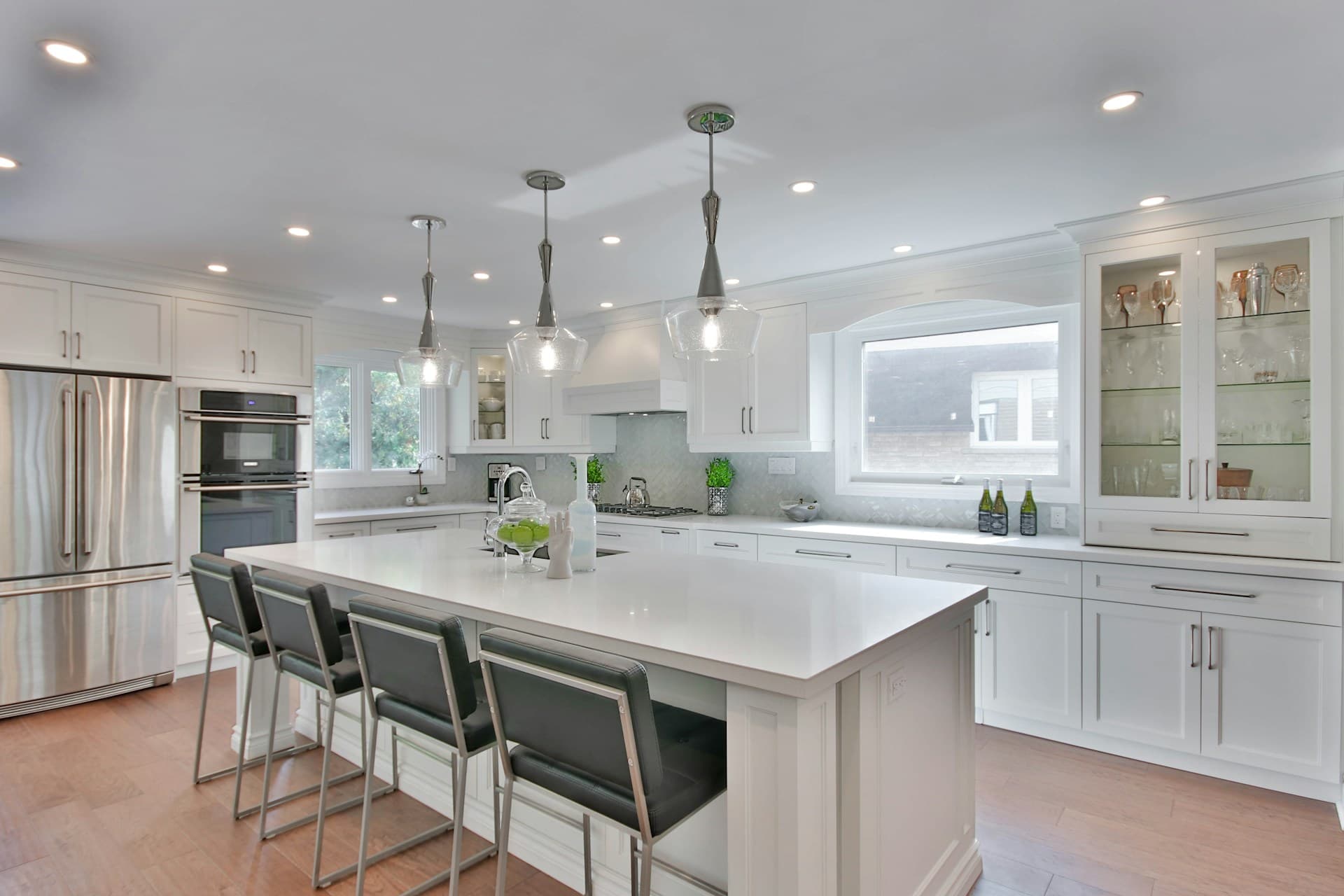
The Art and Science of Kitchen Lighting Design: Layering, Fixtures, and Ambiance
By Total Care Kitchens Thu Feb 26 20268 minutes

Illuminating the Heart of the Home: Why Kitchen Lighting Matters
Proper lighting is often the unsung hero of successful kitchen renovations. It not only showcases your design choices but also impacts mood, safety, and functionality. Many homeowners underestimate the power of a well-lit kitchen, only to realize its importance after the renovation dust settles.“A thoughtfully layered lighting plan transforms a kitchen from purely functional to truly spectacular.”
The Three Layers of Kitchen Lighting: Task, Ambient, and Accent
A balanced lighting scheme incorporates three essential layers. Understanding how to blend these elements creates a kitchen that is both beautiful and practical, enhancing everything from meal prep to entertaining guests.- Task Lighting: Focused illumination for work areas like countertops, sinks, and cooktops.
- Ambient Lighting: General lighting that fills the room and sets the overall mood.
- Accent Lighting: Decorative or directional lights that highlight architectural details, backsplashes, or art.
Choosing the Right Fixtures for Each Lighting Layer
Selecting the appropriate fixtures for each layer can be overwhelming, given the vast array of options. Prioritize quality and adaptability, and consider the interplay between natural and artificial light throughout the day.- Recessed Downlights: Provide unobtrusive ambient lighting.
- Pendant Lights: Ideal for islands and dining nooks, offering both task and accent lighting.
- Linear Suspension Fixtures: Make a statement over elongated islands or peninsulas.
- LED Strip Lights: Perfect for under-cabinet or toe-kick illumination.
- Wall Sconces: Add drama and warmth to breakfast corners or open shelving.
Dimming and Controls: Customizing Ambiance and Efficiency
Integrating dimmers and smart controls gives you the flexibility to shift from bright, energizing light in the morning to a soft, intimate glow for evening gatherings. Smart lighting systems can also contribute to energy savings and personalized routines.“Lighting is the most versatile design tool in your kitchen—control it, and you control the mood.”
Common Kitchen Lighting Mistakes to Avoid
Even the most luxurious kitchens can fall flat if lighting is an afterthought. Avoiding these pitfalls ensures your investment shines—literally and figuratively.- Over-reliance on a single ceiling fixture, leading to shadows and uneven illumination.
- Neglecting task lighting for prep areas, making food preparation tedious and unsafe.
- Choosing the wrong color temperature, resulting in a kitchen that feels too sterile or too dim.
- Skipping dimmers, which limits the ability to adjust lighting for different activities.
- Failing to account for natural light and its impact throughout the day.
Kitchen Lighting Fixture Comparison Table
| Fixture Type | Best For | Pros | Cons |
| Recessed Downlights | General/Ambient | Discreet, versatile | Can create shadows if poorly placed |
| Pendant Lights | Task/Accent | Decorative, focused | May obstruct sightlines if hung too low |
| LED Strip Lights | Task/Accent | Energy-efficient, flexible | Requires professional installation for seamless look |
| Wall Sconces | Accent | Adds character, layered effect | Limited task lighting capability |
Trending Aesthetics: Blending Functionality with Style
Current lighting trends in kitchen renovation emphasize sculptural fixtures, mixed metals, and minimalist profiles. Homeowners are embracing fixtures that double as art, while still prioritizing adaptability and efficiency. The interplay of materials—matte black, brushed brass, and glass—adds visual intrigue without sacrificing function.Eco-Friendly and Smart Lighting Upgrades
LED technology and smart controls are revolutionizing kitchen lighting. Not only do these solutions reduce energy consumption, but they also allow for dynamic color tuning and scheduling, supporting both sustainability and convenience aspirations.- LED bulbs and fixtures for significant energy savings.
- Smart switches and voice-controlled systems for hands-free operation.
- Occupancy sensors to ensure lights are only on when needed.